

 Boise, ID 83705
 M-F: 8:00am - 9:00pm


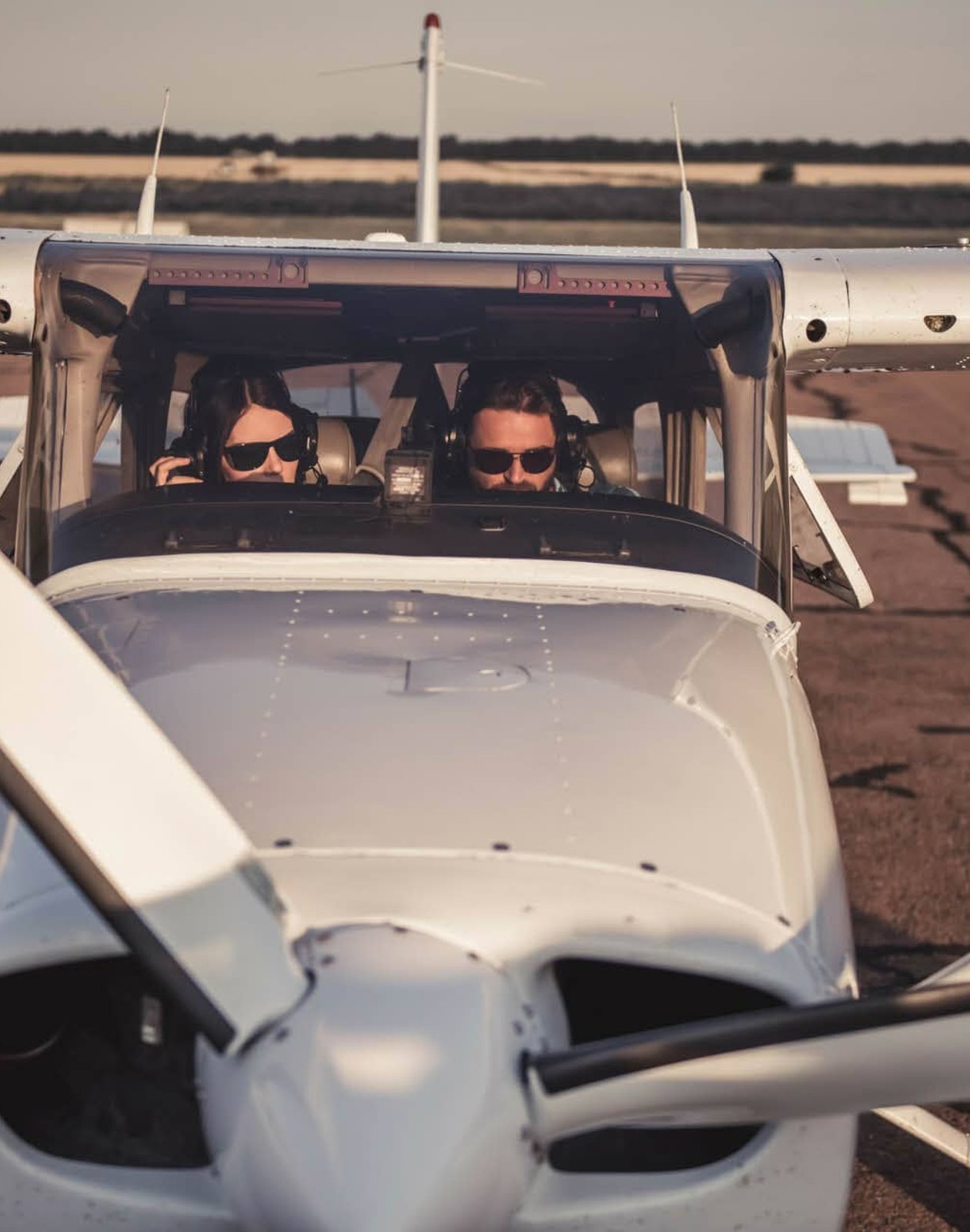
The Best Way to Build Hours Is to Teach Someone Else to Fly.
The Certified Flight Instructor certificate is where most career-track pilots go after their Commercial. It is the most efficient way to build the flight hours needed for an Airline Transport Pilot certificate, and it is one of the most genuinely rewarding things a pilot can do with their time in the cockpit.
Teaching forces you to understand flying at a level that simply logging hours never achieves. Your students' questions make you a better pilot. Their first solos make every early morning preflight worth it. And the hours add up fast.
Carmel Aviation trains CFIs and actively hires from within. When Dominic walked through our door, he was a student curious about flying. He walked back through it as one of our instructors. That is not the exception here. That is the culture.
- 100+ Students Trained
- 30 Checkride Passes
- 19 First Solos
- 2 Gold Seal CFI on Staff
- 15 Private Pilots Certified
What the CFI Course Covers
The Certified Flight Instructor curriculum is focused on teaching you to teach. You will master the art of instruction, lesson planning, and become deeply familiar with both the theory and practice of flight from a teacher’s perspective.
Schedule A Discovery Flight
Fundamentals of Instructing
Before you can teach flying, you learn to teach. The FOI curriculum covers learning theory, the teaching process, human behavior in training environments, and how to evaluate student progress. It is the pedagogical foundation that separates great instructors from pilots who can simply fly well.

Fundamentals of Airplane
You revisit everything you know about aerodynamics, aircraft systems, flight performance, and weather from the perspective of someone who needs to explain it clearly to a student who has never heard it before. The depth of understanding required to teach is significantly greater than the depth required to pass your own checkrides.

CFI Lesson Plans
You build a complete set of lesson plans covering every topic in the Private Pilot curriculum. This is one of the most practically valuable parts of your CFI training because those lesson plans become your actual teaching tools the moment you start instructing.

CFI and CFII Checkrides
The CFI checkride is widely considered the most demanding practical test in civilian aviation. The oral portion alone can run several hours. Carmel's instruction is designed to prepare you for both the CFI (airplane) and CFII (instrument) ratings so you graduate with the credentials to teach both.
What the CFI Certificate Makes Possible
A Private Pilot certificate is not just a piece of paper. It is the key to a completely different relationship with the world you live in. Here is a fraction of what becomes possible
Build Hours Toward the Airlines
The Airline Transport Pilot certificate requires 1,500 flight hours. The CFI certificate is the most effective way to build those hours while getting paid to fly. Most regional airline-bound pilots spend two to four years instructing before reaching ATP minimums.
A Flexible Side Career
Not every CFI is chasing an airline seat. For pilots who want flying to be part of their life without making it their entire career, instructing offers flexible scheduling, competitive hourly compensation, and the satisfaction of developing other pilots.
Stay in the Cockpit
CFIs log significant flight time. If your goal is simply to fly as much as possible while building a life around aviation, instructing at a school like Carmel keeps you in the left seat far more hours per week than most other options available to a Commercial-certificate pilot in Idaho.
Flight Instructor (CFI) FAQ
To apply for a CFI certificate under Part 61, you must hold a Commercial Pilot License, have logged at least 250 total flight hours, hold a valid FAA medical certificate, and pass both the Fundamentals of Instructing (FOI) knowledge test and the Flight Instructor - Airplane (FIA) knowledge test before your practical exam. A current Instrument Rating is not technically required by the FAA for a basic CFI certificate, but it is strongly recommended. Most flight schools, including Carmel, prefer to hire instructors who hold both a CFI and CFII, and the instrument knowledge makes you a more complete and capable instructor from day one.
The CFII is the Certificated Flight Instructor - Instrument rating. It authorizes you to provide instrument flight instruction in addition to basic flight instruction. Most flight schools, including Carmel, prefer to hire instructors who hold both their CFI and CFII because it expands the students you can take on and the instruction you can provide.
Most students complete their CFI training in two to four months, depending on how frequently they fly and how much ground preparation they put in before each lesson. The CFI practical exam is widely considered one of the most demanding checkrides in civilian aviation because you are tested not only on your flying ability but on your ability to teach. Strong students who invest time in their lesson plans and ground preparation consistently move through the course faster. Your Carmel instructor will give you an honest assessment of your timeline early in training.
Flight instructor compensation varies based on hours flown, the school's rate structure, and how busy the flight school is. At Carmel Aviation, our instructor rate is $75 per hour. CFI income is tied directly to how many students you are flying with and how consistently you are scheduled. For instructors building toward a commercial or airline career, the CFI position serves two purposes simultaneously: it generates income while building the flight hours required for the next step. Many instructors treat it as a paid path to their ATP minimums rather than a long-term career endpoint, though some do stay in instruction long-term by choice.
Yes, and you are not unusual here. Several people on the Carmel team came to aviation from entirely different careers. Crice spent 20 years in Air National Guard aircraft maintenance before transitioning to civilian flying full-time. Kcarpenter spent 15 years in motocross before taking a discovery flight and deciding to pursue his CFI. The path from zero flight experience to a CFI certificate is longer than it once was for someone with no prior hours, but it is well-documented, the costs are manageable with a plan, and Part 61's flexible scheduling is specifically designed to accommodate people who are working while they train. If you are in your 30s or 40s and wondering whether it is too late: it is not. Call us and we will walk through what a realistic timeline looks like for your situation.
Yes. We actively recruit from within our student pipeline. If you train here, demonstrate the teaching ability and character we look for, and want to join our team, we want to have that conversation. Talk to us before your checkride, not after.